Introduction
This research focuses on the operation of a DSLR camera(Canon EOS Rebel T6i) and a System camera (Canon EOS R100) , with particular emphasis on the camera and flash software and the connections between various components.
The aim of the study is to demonstrate that certain camera settings do not directly affect the flash’s functionality. Additionally, it seeks to prove that the software used has no significant impact on the flash’s operation. This understanding is crucial for ruling out technical causes for flash malfunctions and for accurately diagnosing potential connection issues or settings.

Methodology
To conduct this research, I developed a simulator that generates an impulse every minute to trigger the software to take a series of four photos. This results in 4 photos per minute or 240 photos per hour.

The software used is Darkroombooth version 2024.
The simulator functions as a timer. Within each session, the interval between two photos is set to 5 seconds, with a live-view period also lasting 5 seconds. This results in a total interval of 10 seconds between two photos. Each session lasts less than a minute, leaving 40 seconds besides the time taken for photo capture. The simulator initiates a total of 700 sessions, yielding a collection of 2800 photos.
The simulator is configured to produce one session of four photos per minute.
To exclude the influence of autofocus (AF) or manual focus (MF), the setup focuses on a fixed point, ensuring no movement is possible. This static setup proves that AF or MF does not impact the test results and ensures consistency across experiments.
Various setups were tested with different settings and shutter speeds:
- One session was conducted with autofocus (AF) and another with manual focus (MF).
- Multiple sessions were conducted with shutter speeds of 1/160 and 1/125 seconds.
The first camera used was the Canon EOS Rebel T6i (American designation for the Canon EOS 750D). Subsequently, all tests were repeated with the Canon EOS R100.
Canon EOS 750D or Canon EOS Rebel T6i
The studio flash used in this research is the Falcon Eyes TF401. Synchronization between the Canon cameras and the flash was achieved using a mono 6.3 mm jack instrument cable. The socket is a Tip-Ring-Slave (TRS) connector, ensuring compatibility with the flash. This connection played a crucial role in maintaining stable communication between the camera and the flash during all sessions.

Results
The results of the study were particularly interesting, showing clear differences between the Canon EOS Rebel T6i and the Canon EOS R100.
- When testing the Canon EOS Rebel T6i (Canon EOS 750D), all settings, connections, and sessions yielded flawless results. None of the 2800 photos showed deviations; all were correctly exposed, and the flash functioned consistently as expected.
- For the Canon EOS R100, the results were less consistent. With identical settings and setup, random photos were taken without exposure because the flash did not fire. Notably, the shutter speed significantly affected the number of unexposed photos:
- At a shutter speed of 1/160, the number of unexposed photos was higher.
- Reducing the shutter speed to 1/125 significantly decreased the number of unexposed photos, though some remained.

Additional Tests
To further investigate the cause, additional tests were conducted with altered configurations:
- New direct synchronization cable:
A new cable without a TRS connector, borrowed from a photobooth colleague, was used. - New studio flash:
The Falcon Eyes TF401 was replaced with a GODOX Mini Pioneer 250DI, connected with the original cable.
Remarkable Results
With the new configuration and the Canon EOS R100, the tests yielded nearly flawless results:
- At a shutter speed of 1/125, the number of unexposed photos was 0.
- At a shutter speed of 1/160, only one unexposed photo occurred out of 1500.
These results indicate that both the synchronization cable and the flash can influence the performance of the Canon EOS R100.
Analysis of the GODOX Mini Pioneer 250DI
During additional tests with the GODOX Mini Pioneer 250DI flash paired with the TRS socket and the 6.3 mm instrument cable, a notable issue was observed:
- The flash fired only once and then failed to work for subsequent photos.
- Moreover, the flash test button on the GODOX Mini Pioneer 250DI stopped functioning once the connection between the 6.3 mm cable and the flash was established.

Connection Analysis
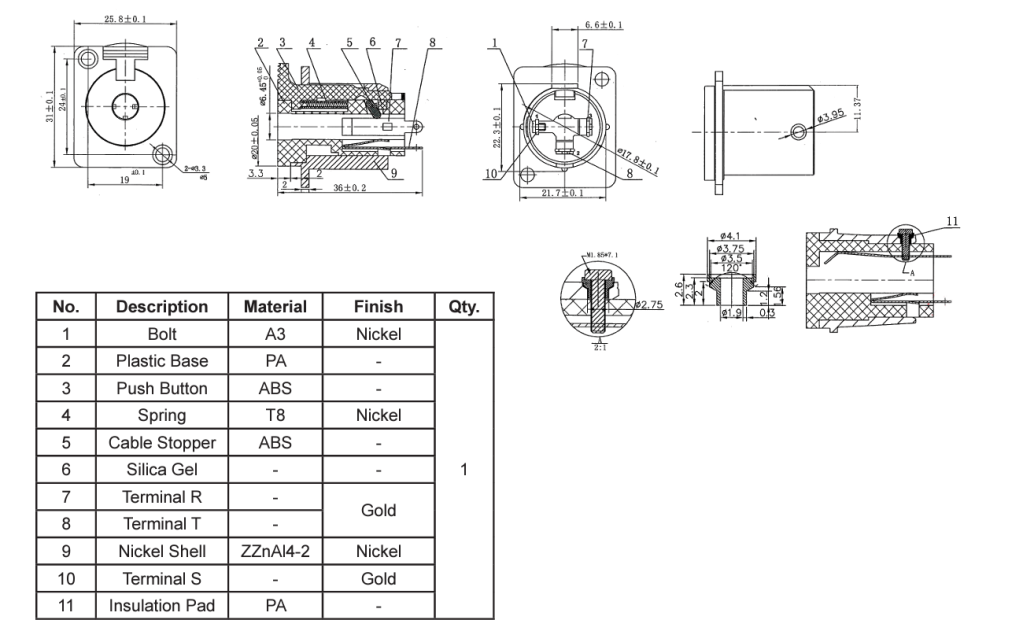
An analysis of the connection revealed that the TRS socket made an incorrect connection between the Ring and Slave. This faulty wiring did not affect the operation of the Falcon Eyes TF401 studio flash but proved problematic for the GODOX Mini Pioneer 250DI.
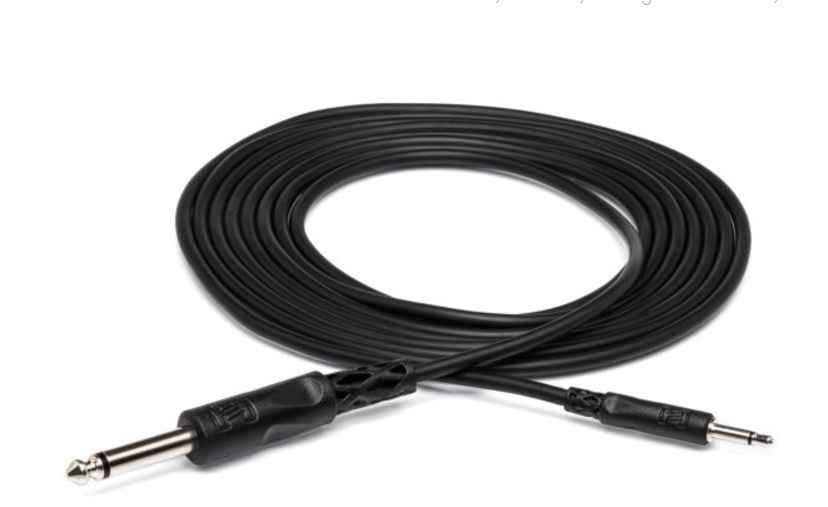
Additionally, the mono jack cable used was scrutinized. It was found that a Hosa mono interconnect, specifically designed for flash synchronization, offers an ideal connection. These cables are designed to ensure a stable and reliable connection, which is critical for the proper functioning of studio flashes like the GODOX Mini Pioneer 250DI.
Conclusion
The research highlights that shutter speed affects the number of unexposed photos with mirrorless cameras:
- 1/125 performs significantly better than 1/160.
Furthermore, the choice of synchronization cables influences flash performance. While a standard mono cable may suffice in some cases, for sensitive equipment like the GODOX Mini Pioneer 250DI, a specially designed cable, such as the Hosa mono interconnect, is a more reliable option to minimize errors.
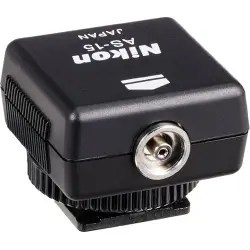
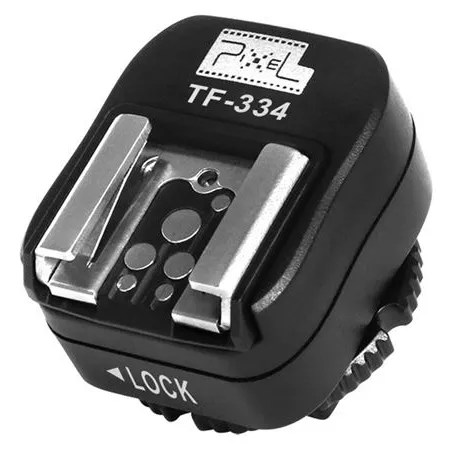
The hotshoes used—Pixel TF334 and Nikon AS-15—did not impact the test results. However, the Nikon AS-15 is merely a passthrough for the contact points on the camera’s hotshoe connection. It is rather expensive for such a basic function.
 Luc van de Photobooth | verhuur | Vlaanderen